
What is differentiation in a single variable?
Earth and Atmospheric Sciences
Calculus is essentially the mathematics of change. While basic math and algebra deal with things that are static or move at constant rates, calculus gives you the tools to analyze things that are constantly shifting—like the path of a rocket, the spread of a virus, or the fluctuations of the stock market.
It is generally divided into two main branches that are inverses of one another:
1. Differential Calculus (The “Derivative”)
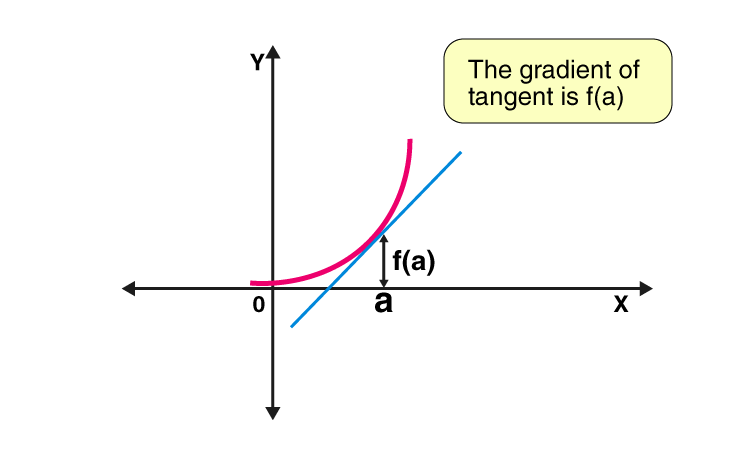
This branch focuses on rates of change at a specific moment.
If you’re driving a car, your average speed is easy to calculate (distance divided by time). But if you want to know your exact speed at the precise second you hit a pothole, you need a derivative. It finds the slope of a curve at a single point.
2. Integral Calculus (The “Integral”)
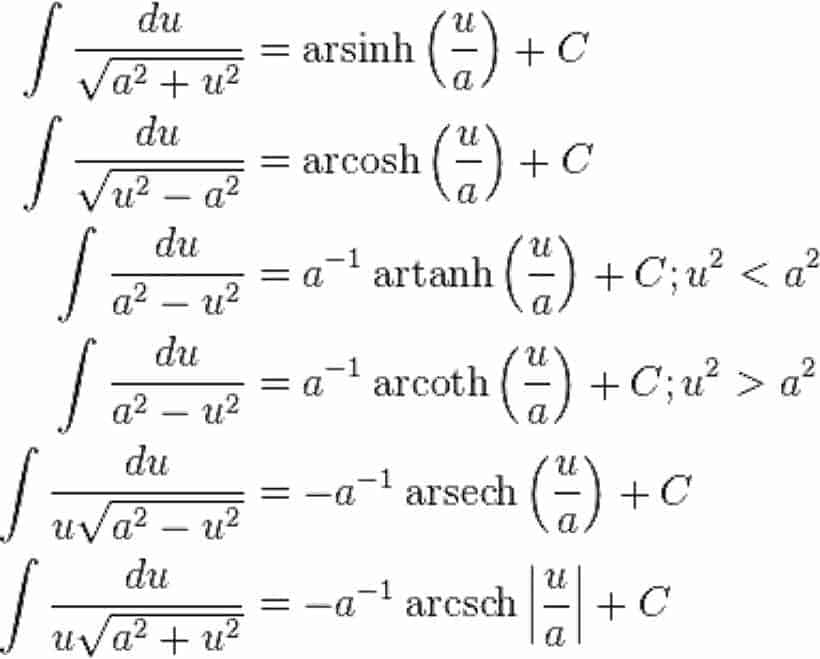
This branch focuses on accumulation.
Instead of looking at how fast something is changing, integration adds up all those tiny changes to find the total. Its most common application is finding the exact area under a curved shape, which is impossible to do with standard geometry formulas.
The “Bridge”: The Fundamental Theorem of Calculus
The “magic” of calculus is that these two ideas are linked. The Fundamental Theorem of Calculus proves that differentiation and integration are opposite operations—much like addition and subtraction.
Mathematically, if we have a continuous function f(x), the relationship is expressed as:
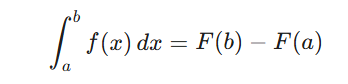
Where F is the antiderivative of f.
Why does it matter?
Without calculus, we wouldn’t have:
- Physics: Understanding gravity and planetary motion.
- Economics: Predicting “marginal” costs and profits.
- Engineering: Building bridges that can withstand variable wind speeds.
- Medicine: Modeling how a drug concentration decays in the bloodstream.