Earth and Atmospheric Sciences
Understanding Meteorology
Meteorology is the scientific study of the atmosphere and its phenomena. It is a branch of the atmospheric sciences that focuses specifically on weather processes and short-term forecasting. By analyzing physical variables like temperature, air pressure, water vapor, and their interactions, meteorologists seek to understand how the atmosphere moves and changes.
Meteorology vs. Weather vs. Climate
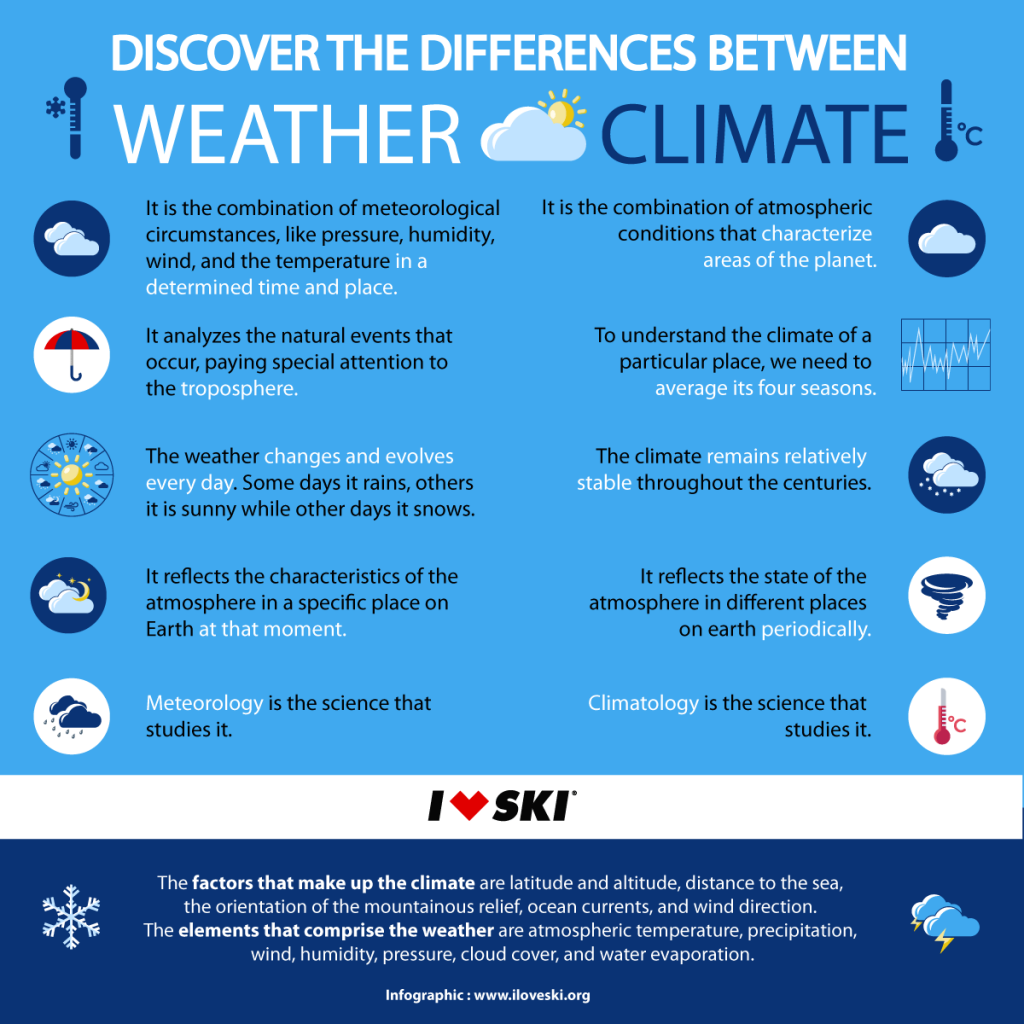
While these terms are often used interchangeably, they represent different scales of time and measurement.
1. Weather
Weather refers to the state of the atmosphere at a specific place and time. It includes daily variations in precipitation, temperature, wind, and humidity. Meteorology is the primary tool used to observe and predict these conditions.
- Timeframe: Minutes to weeks.
- Example: A sudden thunderstorm in Calgary or a clear, sunny afternoon.
2. Climate
Climate is the long-term average of weather patterns in a particular region over a significant period (typically 30 years or more). While meteorology focuses on the “now,” climatology (a subfield of meteorology) looks at trends and averages.
- Timeframe: Decades to centuries.
- Example: The semi-arid nature of the Canadian Prairies or the tropical humidity of the Amazon.
The Relationship with the Environment
Meteorology is inextricably linked to the broader environment. The atmosphere does not exist in a vacuum; it interacts constantly with the Earth’s surface, oceans, and life forms.
- The Hydrological Cycle: Meteorology explains how water evaporates from the oceans, forms clouds in the atmosphere, and returns to the Earth as precipitation, sustaining ecosystems.
- Energy Exchange: The atmosphere acts as a heat engine, redistributing solar energy from the equator to the poles. This movement (wind and ocean currents) dictates which environments become deserts, forests, or tundras.
- Environmental Health: Meteorological conditions affect air quality, the spread of forest fires, and the health of agricultural crops. For instance, atmospheric inversions can trap pollutants near the ground, directly impacting urban environments.
Key Concepts in Meteorological Study
To understand how weather and environment connect, meteorologists focus on several core pillars:
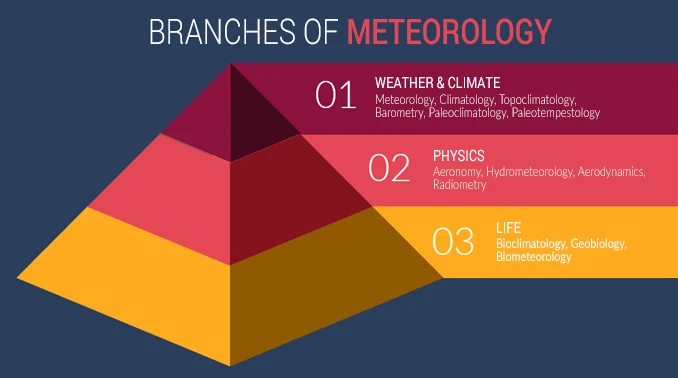
| Concept | Description |
| Thermodynamics | The study of heat, energy, and how they transform the atmosphere (e.g., cloud formation). |
| Dynamic Meteorology | The study of the motions of the atmosphere using fluid dynamics and physics. |
| Synoptic Meteorology | The analysis of large-scale weather systems, such as high and low-pressure fronts. |
| Physical Meteorology | Focuses on physical properties like radiation, optical phenomena (rainbows), and cloud physics. |
What is Meteorology?
Understanding Meteorology
Meteorology is the scientific study of the atmosphere and the physical processes that occur within it. It is a branch of the atmospheric sciences that focuses on understanding the chemistry and physics of the air to explain and predict how the atmosphere behaves.
While most people associate meteorology exclusively with daily weather reports, the field encompasses a wide range of phenomena, from the formation of a single snowflake to global shifts in air circulation.
The Three Pillars of Meteorology
To understand the atmosphere, meteorologists generally look at three interconnected scales:
- Weather: The short-term state of the atmosphere. This includes variables like temperature, humidity, precipitation, and wind speed at a specific moment or over a few days.
- Climate: The long-term statistical average of weather patterns in a specific region, usually tracked over 30 years or more. Climatology is a specialized sub-field of meteorology.
- The Environment: How the atmosphere interacts with the Earth’s surface (the lithosphere), water bodies (the hydrosphere), and living organisms (the biosphere).
Core Areas of Study
Meteorologists use physics and advanced mathematics to break down atmospheric behavior into digestible data:
- Physical Meteorology: Investigates the physical properties of the atmosphere, such as cloud formation, rain droplet physics, and how solar radiation is absorbed or reflected.
- Dynamic Meteorology: Uses fluid mechanics and $Navier-Stokes$ equations to study the forces that cause air to move, creating wind and storm systems.
- Synoptic Meteorology: Focuses on large-scale systems, such as high and low-pressure areas and weather fronts, often covering thousands of kilometers.
- Mesoscale Meteorology: Studies smaller, more localized phenomena that happen quickly, such as thunderstorms, tornadoes, or lake-effect snow.
Why It Matters
Beyond telling us whether to carry an umbrella, meteorology is critical for:
- Aviation and Shipping: Ensuring planes and ships can navigate safely around storms and turbulence.
- Agriculture: Helping farmers time their planting and harvesting based on frost cycles and rainfall.
- Energy: Predicting wind and solar patterns to optimize renewable energy grids.
- Public Safety: Providing early warnings for extreme events like hurricanes, heatwaves, and floods.
What is the history of meteorology?
The history of meteorology is a journey from ancient folklore and philosophical speculation to one of the most computationally intensive sciences in the world. It can be divided into four distinct eras: the age of philosophy, the era of instrumentation, the rise of the telegraph, and the digital revolution.
1. The Era of Speculation (Ancient Times – 1600s)
For millennia, weather was viewed through the lens of mythology or simple observation.
- 650 BC: The Babylonians were among the first to attempt short-term forecasting using cloud patterns and optical phenomena like haloes.
- 340 BC: Aristotle wrote Meteorologica, the first major treatise on the subject. He correctly described the hydrologic cycle (evaporation and precipitation) but also held many incorrect theories that remained the standard for nearly 2,000 years.
- Ancient China: By 300 BC, Chinese astronomers developed a calendar of 24 “festivals” based on recurring seasonal weather patterns.
2. The Instrumental Revolution (1600s – 1800s)
The scientific method demanded measurable data. This era saw the birth of the “Big Three” meteorological tools.
- 1592: Galileo Galilei invented an early thermoscope (the predecessor to the thermometer).
- 1643: Evangelista Torricelli invented the mercury barometer, proving that air has weight and that pressure changes with weather.
- 1714 & 1742: Gabriel Fahrenheit and Anders Celsius standardized temperature scales, allowing scientists to compare data across different regions.
- 1780: The Societas Meteorologica Palatina in Germany established the first international network of weather stations.
3. The Telegraph and Synoptic Charts (1800s – 1920s)
Before the mid-19th century, weather moved faster than information. If a storm was coming, you didn’t know until it hit.
- 1837: The invention of the telegraph by Samuel Morse changed everything. For the first time, weather observations could be transmitted faster than the wind.
- 1854: After a disastrous storm during the Crimean War, France and the UK established the first official national weather services to provide storm warnings.
- 1917: The Bergen School of Meteorology in Norway (led by Vilhelm Bjerknes) developed the concept of fronts and air masses, creating the visual “weather map” style we still use today.
4. The Digital & Satellite Age (1940s – Present)
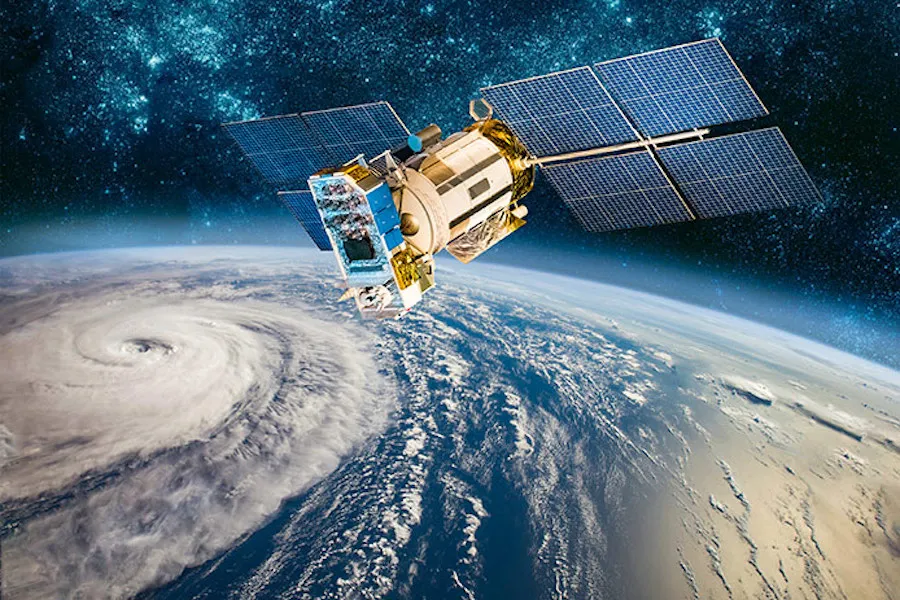
The modern era turned meteorology into a rigorous mathematical discipline.
- 1922: Lewis Fry Richardson attempted the first “numerical weather prediction.” He tried to calculate the weather using math by hand; it took him six weeks to produce a six-hour forecast that was ultimately incorrect, but the theory was sound.
- 1950: The first successful computer-generated weather forecast was performed on the ENIAC, the world’s first general-purpose electronic computer.
- 1960: The launch of TIROS-1, the first weather satellite, allowed humans to see cloud formations and storm systems from space for the first time.
Summary of Milestones
| Era | Key Milestone | Impact |
| Philosophical | Aristotle’s Meteorologica | Established meteorology as a field of study. |
| Instrumental | Invention of the Barometer | Allowed for the measurement of atmospheric pressure. |
| Communication | The Telegraph | Enabled real-time data sharing and storm warnings. |
| Computational | ENIAC Computer Forecast | Launched the age of Numerical Weather Prediction (NWP). |
| Satellite | TIROS-1 Launch | Provided a global view of the atmosphere. |
What are the earth’s systems?
To understand the Earth as a whole, scientists use Earth System Science (ESS), which views the planet as a single, complex organism made of five major interacting subsystems. These systems are not isolated; they constantly exchange matter and energy.
The Five Main Spheres
1. The Geosphere (or Lithosphere)
The geosphere includes all the solid parts of the Earth, from the thin outer crust to the dense metallic core. It encompasses rocks, minerals, mountains, and the processes that shape the Earth’s surface, like plate tectonics and volcanic activity.
- Key components: Earth’s core, mantle, crust, rocks, and soil.
2. The Hydrosphere
The hydrosphere consists of all the water on the planet, whether it is on the surface, underground, or in the air. This includes the oceans (which make up about 97% of Earth’s water), lakes, rivers, and groundwater.
- Key components: Oceans, rivers, lakes, and moisture in the soil.
3. The Cryosphere
Often considered a subset of the hydrosphere, the cryosphere specifically refers to frozen water. This system plays a vital role in regulating global climate by reflecting sunlight back into space.
- Key components: Glaciers, ice caps, ice sheets, permafrost, and seasonal snow.
4. The Atmosphere
The atmosphere is the envelope of gases surrounding the Earth. It provides the air we breathe, protects us from harmful solar radiation, and is the medium for all weather and climate processes.
- Key components: Nitrogen (78%), Oxygen (21%), Argon, and trace gases like Carbon Dioxide.
5. The Biosphere
The biosphere includes all living organisms on Earth—from the deepest ocean microbes to birds in the high atmosphere. It is unique because it exists at the intersection of all the other spheres.
- Key components: Plants, animals, fungi, and bacteria.
How They Interact: The “Sphere” Exchange
These systems are in a constant state of flux. A change in one sphere often triggers a reaction in others:
- Geosphere to Atmosphere: A volcanic eruption (geosphere) releases ash and gases into the air (atmosphere), which can temporarily cool the planet.
- Atmosphere to Hydrosphere: Wind (atmosphere) creates waves and currents in the ocean (hydrosphere), redistributing heat.
- Hydrosphere to Biosphere: Rain (hydrosphere) provides the water necessary for plants to grow (biosphere).
- Biosphere to Atmosphere: Forests (biosphere) absorb carbon dioxide and release oxygen (atmosphere) through photosynthesis.
Energy: The Driving Force
Two primary energy sources keep these systems moving:
- The Sun: Drives the atmosphere, hydrosphere, and surface processes (like the water cycle).
- Internal Heat: Leftover heat from Earth’s formation and radioactive decay drives the geosphere (plate tectonics and mountain building).
What is Earth System Science?
Earth System Science (ESS) is an interdisciplinary field of study that examines the Earth as a single, integrated system rather than a collection of isolated parts. Instead of studying biology, geology, or meteorology in vacuums, ESS focuses on the interactions and “feedbacks” between the planet’s various physical, chemical, biological, and human components.
The Core Philosophy: Holism
In traditional science, you might study a river (hydrology) or a forest (botany). In Earth System Science, you study how the river provides nutrients to the forest, how the forest transpires water back into the atmosphere, and how that water eventually falls back as rain into the river.
It is driven by the understanding that a change in one “sphere” (like the atmosphere) inevitably causes ripples in the others (like the biosphere or geosphere).
The Primary Subsystems (The Spheres)
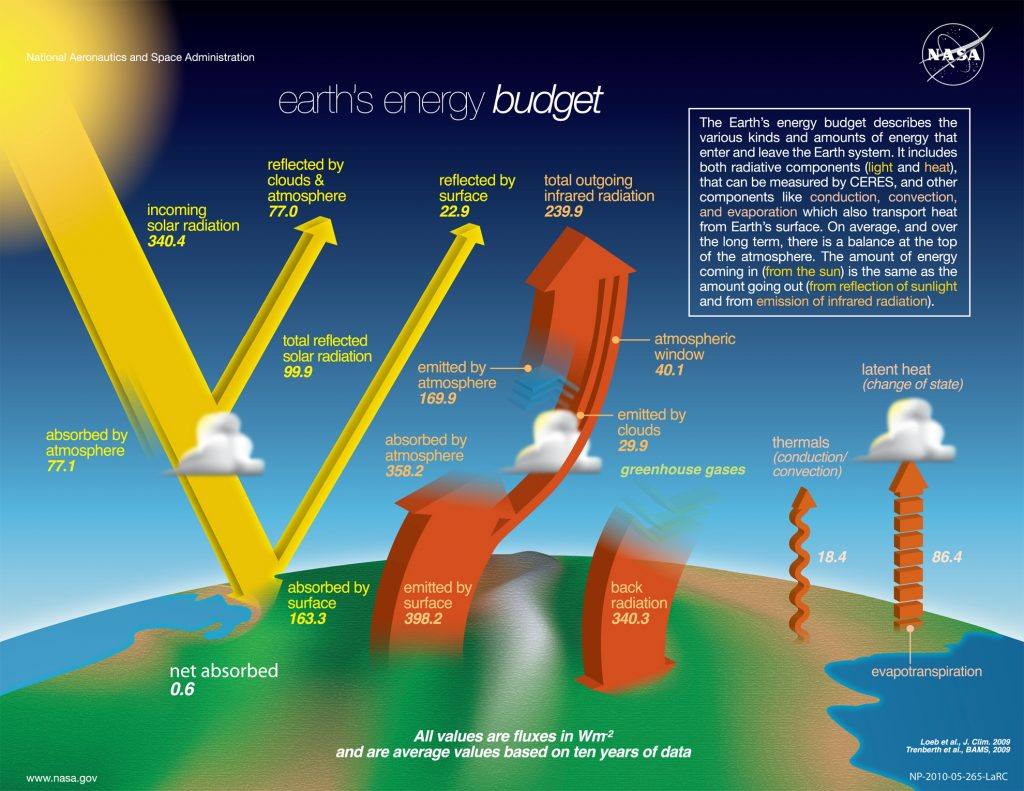
ESS organizes the planet into five main functional components that are constantly exchanging matter and energy:
- Geosphere: The solid Earth (rocks, mountains, core).
- Hydrosphere: All liquid water (oceans, rivers, groundwater).
- Cryosphere: All frozen water (glaciers, sea ice, permafrost).
- Atmosphere: The layer of gases surrounding the planet.
- Biosphere: All living organisms and their habitats.
Key Concepts in ESS
1. Feedback Loops
These are processes where an initial change triggers a chain of events that either reinforces or dampens the original change.
- Positive Feedback: Accelerates a trend (e.g., melting sea ice reveals darker ocean water, which absorbs more heat, causing more ice to melt).
- Negative Feedback: Stabilizes a system (e.g., increased $CO_2$ can lead to more plant growth, which then absorbs some of that $CO_2$).
2. Biogeochemical Cycles
ESS tracks the movement of essential elements like Carbon, Nitrogen, and Phosphorus as they travel through the different spheres. For example, the Carbon Cycle moves carbon from the geosphere (volcanoes) to the atmosphere ($CO_2$), to the biosphere (plants), and back to the hydrosphere (ocean absorption).
3. The Human Element (The Anthroposphere)
Modern Earth System Science increasingly treats human activity as a major geological force. This includes how land use, industrialization, and resource extraction alter the natural balance of the other spheres.
Why ESS is Important
By using satellite data and complex computer models, Earth System Science allows us to:
- Predict Climate Change: Understand how warming oceans affect weather patterns and food security.
- Manage Resources: Track how groundwater depletion affects soil stability and local ecosystems.
- Respond to Hazards: Model how a volcanic eruption in one hemisphere might lead to a crop failure in another due to atmospheric ash.