
Why is it important to understand the earth system?
Earth and Atmospheric Sciences
In geology, igneous rocks are essentially the “fire-born” products of our planet.1 They form when molten rock cools and solidifies into a solid state.2
Can a rock melt?
Yes, absolutely.3 Just like ice melts into water when it gets warm enough, rocks melt when they are subjected to extreme heat.4 However, because rocks are made of various minerals, they don’t all melt at once.5
- The Melting Point: Most rocks begin to melt at temperatures between 600°C and 1,300°C (61,100°F to 72,400°F).8
- Partial Melting: Since different minerals have different melting points, a rock will often become a “slushy” mixture of liquid and solid crystals before it turns completely into liquid magma (underground) or lava (above ground).9
- Location: This melting typically happens deep within the Earth’s crust or upper mantle, often triggered by intense pressure, high temperatures, or the presence of water which lowers the melting point.10
Two Main Types of Igneous Rocks
The appearance of an igneous rock depends almost entirely on where it cooled and how fast it did so.
| Type | Formation Location | Cooling Speed | Crystal Size | Common Examples |
| Intrusive (Plutonic) | Deep underground | Very Slow | Large, visible crystals | Granite, Diorite |
| Extrusive (Volcanic) | At or near the surface | Fast | Tiny or no crystals | Basalt, Obsidian |
- Intrusive Rocks: Because they are insulated by the surrounding earth, they cool over thousands of years.11 This gives crystals plenty of time to grow large, like the speckles you see in a granite countertop.12
- Extrusive Rocks: When a volcano erupts, the lava hits the cool air or water and “freezes” almost instantly.13 This results in a fine-grained texture or even a “glassy” look (like Obsidian) because crystals didn’t have time to form.14
Summary of the Process
- Melting: Existing rock is pushed deep into the Earth where it melts into magma.15
- Rising: Being less dense than the surrounding solid rock, the magma rises.16
- Crystallization: As it loses heat, the atoms slow down and lock into a regular pattern, forming mineral crystals.17
Would you like me to explain how specific minerals like quartz or feldspar affect the color of these rocks?
Explaining the Rock Cycle
This video provides a clear visual breakdown of how rocks transition from melting into magma to cooling into igneous formations.
What are the major types of igneous rocks?
To classify igneous rocks, geologists look at two main factors: where they formed (texture) and what they are made of (composition).
1. Classification by Formation (Texture)
As we discussed, the cooling speed determines the size of the crystals.1
- Intrusive (Plutonic): Magma cools slowly deep underground, allowing large, visible crystals to grow.2 Examples: Granite, Gabbro.3
- Extrusive (Volcanic):4 Lava cools quickly at the surface, resulting in tiny crystals (fine-grained) or even a glass-like texture.5 Examples: Basalt, Obsidian.
- Porphyritic:6 This occurs when magma begins cooling slowly underground (forming large crystals) and is then suddenly erupted, causing the rest of the rock to cool quickly (forming a fine-grained background). It looks like “chocolate chip cookie” rock.
2. Classification by Chemical Composition
This is the most common way geologists group these rocks. It is based primarily on the amount of silica (7SiO2) versus heavier elements like iron and magnesium.8
| Type | Silica Content | Color & Density | Common Minerals | Typical Examples |
| Felsic | High (>65%) | Light (Pink, White) | Quartz, Feldspar | Granite, Rhyolite |
| Intermediate | Medium (55-65%) | “Salt & Pepper” | Amphibole, Plagioclase | Diorite, Andesite |
| Mafic | Low (45-55%) | Dark (Black, Green) | Pyroxene, Olivine | Gabbro, Basalt |
| Ultramafic9 | Very Low (<45%)10 | Very Dark/Green11 | Mostly Olivine12 | Peridotite13 |
Unique “Specialty” Igneous Rocks
Sometimes, the way a rock cools is so unique that it doesn’t fit the standard crystalline look:
- Obsidian: Volcanic glass formed by lava cooling so fast that crystals couldn’t form at all.14
- Pumice: A frothy, “bubbly” rock formed when gas-rich lava is ejected.15 It is so full of air pockets that it can actually float on water.16
- Scoria: Similar to pumice but darker and denser, usually formed from mafic (basaltic) lava.
Where does magma come from?
It is a common misconception that the Earth’s mantle is a giant ocean of liquid lava. In reality, the mantle is actually solid rock.1
Magma is only created in very specific “pockets” where the conditions are just right to force that solid rock to melt.2 There are three main ways this happens:
1. Decompression Melting (Lowering Pressure)3
Imagine holding a spring compressed in your hand; if you open your hand, the spring expands. Rock deep in the Earth is under so much pressure that it stays solid even though it is hot enough to melt.4
- How it works: When hot mantle rock rises toward the surface (at mid-ocean ridges or hotspots), the pressure on it drops.5
- The result: This drop in pressure allows the rock to expand and melt into magma without needing any extra heat.6
2. Flux Melting (Adding Water)
This is the most surprising way magma forms.
- How it works: In subduction zones, an oceanic plate slides deep into the mantle.7 This plate carries water and “wet” minerals with it.8 As it heats up, it “sweats” that water into the hot mantle rock above it.9
- The result: Adding water lowers the melting point of the rock—much like putting salt on an icy sidewalk makes the ice melt at a lower temperature.10 This creates the magma that feeds volcanoes like those in the Ring of Fire.11
3. Heat Transfer (Adding Heat)
This is the most straightforward method.
- How it works: When super-hot magma from deep in the Earth rises into the cooler crust, it brings an immense amount of heat with it.
- The result: This heat can toast the surrounding crustal rock until it melts, creating new magma with a different chemical “flavor” (usually more silica-rich).12
Where is Magma Stored?
Once magma forms, it is less dense than the solid rock around it, so it begins to “float” upward.13 It often pools in magma chambers—huge, underground reservoirs—within the Earth’s crust. From there, it will either cool slowly to become intrusive rock (like granite) or erupt to become lava.
| Location | Melting Process | Common Rock Formed |
| Mid-Ocean Ridges | Decompression | Basalt |
| Subduction Zones | Flux Melting | Andesite / Rhyolite |
| Hotspots (e.g., Hawaii)14 | Decompression15 | Basalt16 |
What is magmatic differentiation?
Magmatic differentiation is the “umbrella term” for all the processes that cause a single parent magma to change its chemical composition as it cools.1
Essentially, it is how nature takes one “flavor” of magma (usually basaltic) and turns it into a variety of different rocks like andesite, diorite, or granite.2 If this process didn’t happen, the Earth’s crust would be much more uniform and boring!
How It Works: The Main Mechanisms
The most important thing to remember is that magma does not freeze all at once. Because it is a cocktail of different minerals, it solidifies in stages.3
1. Fractional Crystallization (The “Filter” Effect)
This is the most powerful driver of differentiation. As magma cools, minerals with the highest melting points (like Olivine) crystallize first.4
- Gravity Settling: These early crystals are often denser than the liquid magma, so they sink to the bottom of the magma chamber.5
- The Result: Because these crystals take specific elements (like iron and magnesium) with them to the bottom, the remaining liquid becomes “enriched” in the elements that are left behind, such as silica, sodium, and potassium.6
2. Assimilation (The “Melting In” Effect)
As hot magma rises through the Earth’s crust, it acts like a hot iron.
- How it works: It melts the “country rock” (the existing solid rock) surrounding the magma chamber.7
- The Result: The melted pieces of the crust mix into the magma, changing its chemical signature.8 If a basaltic magma melts a silica-rich granite crust, the magma becomes more “felsic” (silica-rich).
3. Magma Mixing
Sometimes, two different “bodies” of magma—one perhaps old and cooling, and another fresh and hot from below—meet and blend.9
- The Result: This creates a hybrid magma with a composition halfway between the two originals.10
Bowen’s Reaction Series
To understand which minerals leave the “soup” first, geologists use Bowen’s Reaction Series.11 It ranks minerals by the temperature at which they crystallize.12
Shutterstock
- High Temperature (First to crystallize): Olivine and Calcium-rich Plagioclase.13 If these sink and are removed, the magma is no longer “Ultramafic.”
- Low Temperature (Last to crystallize): Quartz and Potassium Feldspar. These are the “leftovers” that form rocks like Granite.
Summary Table
| Process | Action | Impact on Magma |
| Fractional Crystallization | Crystals sink/separate | Remaining liquid becomes more silica-rich. |
| Assimilation | Magma melts wall rock | Magma takes on the chemistry of the crust. |
| Magma Mixing14 | Two magmas blend15 | Creates a “middle-ground” hybrid composition.16 |
Would you like to explore why certain minerals, like Quartz and Olivine, are almost never found in the same rock together?
Magmatic Differentiation and Magma Mixing
This video provides a deep dive into how magma chambers evolve and the textural evidence geologists use to prove that magma mixing has occurred.
What are forms of a magmatic intrusion?
When magma forces its way into the Earth’s crust but fails to reach the surface, it forms an intrusion (also called a pluton).1 Geologists categorize these based on their shape and how they relate to the existing “country rock” layers.2
1. Tabular Intrusions (Sheet-like)3
These are flat, sheet-like bodies of rock.4 They are classified by whether they go with the grain or against it.5
- Sills (Concordant): Magma squeezes parallel to the existing rock layers.6 Think of a sill like a piece of ham in a sandwich; it stays between the bread (rock layers).7
- Dikes (Discordant): Magma cuts across the existing rock layers, often filling vertical cracks.8 They look like stony walls or “veins” when exposed by erosion.
2. Massive & Irregular Intrusions
These are large, blob-like bodies that don’t have a simple sheet shape.
- Batholiths: The “giants” of the geological world.9 These are massive cooling chambers larger than 10100 km2 (roughly the size of a city).11 They often form the core of mountain ranges, like the Sierra Nevada in California.
- Stocks: Essentially small batholiths.12 If the exposed area is less than 13100 text km2, it’s called a stock.14
3. Specialized Shapes
Sometimes the pressure or thickness (viscosity) of the magma creates unique geometries:15
- Laccoliths: A “blister” in the Earth.16 If the magma is too thick to spread out into a thin sill, it piles up and pushes the overlying rock layers upward into a dome shape.17
- Lopoliths: A saucer-shaped intrusion.18 These form when the weight of the magma causes the underlying rock layers to sag downward into a bowl.19
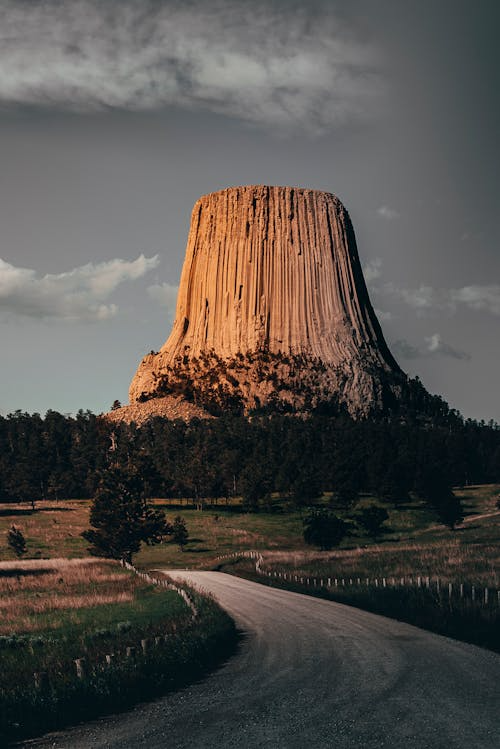
- Volcanic Necks (Pipes): This is the “throat” of a dead volcano.20 When the volcano stops erupting, the magma inside the main vent solidifies.21 Over time, the soft cone of the volcano erodes away, leaving behind a tall, solid tower of rock (like Devil’s Tower in Wyoming).
Comparison Summary
| Feature | Relationship to Layers | Shape |
| Sill | Concordant (Parallel) | Thin, flat sheet |
| Dike | Discordant (Cross-cutting) | Vertical wall |
| Laccolith | Concordant (Parallel) | Dome-shaped/Mushroom |
| Batholith22 | Discordant (Cross-cutting)23 | Massive and irregular24 |
What is the relationship between plutonism and plate tectonics?
Plutonism and plate tectonics are two sides of the same coin. Plate tectonics provides the “engine” (heat and pressure changes), while plutonism is the result—the formation of massive underground rock bodies.
Because the Earth’s mantle is solid, you need specific tectonic actions to create the magma that eventually becomes a pluton.1
1. Convergent Boundaries (The “Factory” of Batholiths)2
This is where the most impressive plutonism occurs. When an oceanic plate subducts (sinks) under a continental plate, it carries water into the mantle.3
- The Process: This water triggers flux melting, creating large amounts of magma.4
- The Result: Much of this magma never reaches the surface. Instead, it stalls in the crust and cools into massive batholiths.
- Real-World Example: The Sierra Nevada mountains in California are essentially one giant, ancient plumbing system of plutons that were created by subduction and later pushed to the surface.5
2. Divergent Boundaries (The “Conveyor Belt”)6
As tectonic plates pull apart at mid-ocean ridges, the mantle underneath rises to fill the gap.
- The Process: The rising mantle undergoes decompression melting.7
- The Result: While we often see lava erupting on the sea floor (basalt), a vast amount of that magma cools just beneath the ridge to form gabbro sills and dikes. This process creates the “foundation” of the new oceanic crust.
3. Continent-Continent Collision (The “Pressure Cooker”)
When two continental plates crash (like India hitting Asia), the crust becomes incredibly thick.
- The Process: The deep parts of the thickened crust get so hot from radioactive decay and pressure that they begin to melt in place (a process called anatexis).
- The Result: This creates “S-type” granites—plutons made from melted sedimentary crust rather than the mantle.
- Real-World Example: The Himalayas contain many small granitic plutons formed this way, even though there are very few active volcanoes there.
4. Hotspots (The “Blowtorch”)
Though not always at a plate boundary, hotspots are a key tectonic feature where a plume of heat rises from deep in the mantle.8
- The Process: The intense heat melts the base of the moving plate above it.
- The Result: As the plate moves, the hotspot leaves a trail of both volcanic islands and a “hidden” trail of underground plutons and complex dikes.
Summary Table: Tectonics vs. Rock Types
| Tectonic Setting | Melting Type | Resulting Plutonic Rock |
| Subduction Zone | Flux Melting | Granodiorite, Diorite (Batholiths) |
| Mid-Ocean Ridge | Decompression | Gabbro (Sills and Dikes) |
| Continental Collision | Heat/Pressure | Granite |
Solved Problems
Here is a collection of high-level problems and solutions regarding igneous petrology, magmatic processes, and their relationship with plate tectonics. These problems range from conceptual “why” questions to “how-to” identification scenarios.
Phase 1: Melting and Magma Origins
1. Problem: If the Earth’s mantle is solid, why does melting occur at mid-ocean ridges?
Solution: Melting occurs due to decompression. As tectonic plates pull apart, mantle rock rises. Because the pressure decreases faster than the rock can cool, the “solidus” line is crossed, and the rock melts without adding extra heat.
2. Problem: How does the addition of water (volatiles) cause a rock to melt in a subduction zone?
Solution: Water acts as a “flux.” It disrupts the chemical bonds in the silicate minerals of the mantle, lowering the melting temperature (the melting point). This is called flux melting.
3. Problem: Why is magma at hotspots (like Hawaii) usually basaltic, while magma at subduction zones (like the Andes) is often andesitic or rhyolitic?
Solution: Hotspot magma comes directly from the mantle (mafic/basaltic). Subduction zone magma undergoes magmatic differentiation and assimilation as it rises through thick continental crust, picking up silica and becoming more felsic (andesitic/rhyolitic).
4. Problem: Why do rocks not have a single “melting point” like ice?
Solution: Rocks are aggregates of different minerals (quartz, feldspar, etc.). Each mineral has a different melting point, leading to partial melting, where some parts of the rock are liquid while others remain solid.
Phase 2: Magmatic Differentiation & Bowen’s Series
5. Problem: You find a rock containing both Olivine and Quartz. Why is this geologically “illegal” according to Bowen’s Reaction Series?
Solution: Olivine crystallizes at very high temperatures ($1,200^{\circ}\text{C}$), while Quartz crystallizes at low temperatures ($600^{\circ}\text{C}$). By the time Quartz begins to form, any Olivine would have reacted with the melt or settled out; they are chemically incompatible in a single cooling event.
6. Problem: Explain how fractional crystallization can turn a dark (mafic) magma into a light-colored (felsic) rock.
Solution: As magma cools, heavy minerals rich in iron and magnesium (like olivine) crystallize and sink. This removes those elements from the liquid, leaving the remaining “melt” enriched in silica and aluminum, which eventually cools into light-colored rocks like granite.
7. Problem: A magma chamber is surrounded by limestone. What happens to the magma’s chemistry?
Solution: This is assimilation. The magma melts the limestone (calcium carbonate), incorporating calcium into its chemistry. This can shift the magma from a standard composition to one that is more “calc-alkaline” or carbon-rich.
8. Problem: How can a single volcano erupt two different types of lava (e.g., basalt and rhyolite) in a short period?
Solution: This is likely due to magma mixing. Two different magma pulses from different depths meet in the same reservoir, or a fresh hot basaltic injection melts the “roof” of the chamber to create a separate rhyolitic melt.
Phase 3: Textures and Identification
9. Problem: A rock has large crystals (phenocrysts) surrounded by a fine-grained “groundmass.” What does this tell you about its cooling history?
Solution: This is a porphyritic texture. It indicates a two-stage cooling process: first, the magma cooled slowly underground (forming large crystals), then it erupted and the rest cooled rapidly at the surface.
10. Problem: Why does Obsidian have no crystals at all?
Solution: Obsidian forms from highly viscous (thick) lava that cools almost instantaneously. The atoms are “frozen” in place before they have time to arrange themselves into a structured mineral lattice.
11. Problem: How do you distinguish a Vesicular rock (like Scoria) from a Glassy rock (like Obsidian)?
Solution: Vesicular rocks are characterized by “vesicles” or holes (trapped gas bubbles). Glassy rocks have a conchoidal (shell-like) fracture and a smooth, non-crystalline surface.
12. Problem: You find a light-colored rock that floats in water. Identify it and explain its texture.
Solution: The rock is Pumice. It has a “frothy” vesicular texture formed when gas-rich, felsic lava is ejected violently, creating a rock that is more air than mineral.
Phase 4: Intrusions and Tectonics
13. Problem: How can you tell an underground Sill apart from a buried Lava Flow?
Solution: A sill will show “contact metamorphism” (heat damage) on both the top and bottom layers of the surrounding rock. A lava flow will only bake the rock underneath it, as the top was exposed to air/water.
14. Problem: Why are Batholiths usually made of Granite/Granodiorite rather than Basalt?
Solution: Basaltic magma is “runny” (low viscosity) and tends to erupt at the surface. Granitic magma is thick and “sticky” (high viscosity), so it often gets stuck in the crust, cooling slowly to form massive batholiths.
15. Problem: If a Dike is found cutting through several horizontal layers of sedimentary rock, which is younger: the dike or the layers?
Solution: According to the Principle of Cross-Cutting Relationships, the dike is younger. A feature must exist before it can be cut by something else.
16. Problem: What tectonic setting creates a Lopolith?
Solution: Lopoliths (saucer-shaped) usually form in “extensional” settings or stable cratons where the weight of a massive intrusion causes the underlying crust to sag downward.
Phase 5: Global Scale Relationships
17. Problem: Why is the oceanic crust almost entirely Basalt and Gabbro?
Solution: Oceanic crust is formed at mid-ocean ridges from the direct partial melting of the upper mantle. This produces mafic magma, which cools as extrusive basalt or intrusive gabbro.
18. Problem: Why are volcanoes found in the middle of plates (like Hawaii) but not plutonic mountain ranges?
Solution: Mid-plate hotspots create focused “pipes” of magma that erupt. Plutonic mountain ranges require the massive compression and subduction found at plate boundaries to create and then uplift the rock.
19. Problem: Explain the presence of Volcanic Necks in a desert with no volcano in sight.
Solution: The volcanic neck is the solidified “plug” of a volcano. Because it is made of hard igneous rock, it resists weathering, while the softer ash and cinder cone of the volcano have eroded away over millions of years.
20. Problem: How does igneous activity contribute to the growth of continents?
Solution: Through accretion and plutonism. Subduction zones create felsic/intermediate magma that is less dense than the mantle. This rock “floats” and stays at the surface, building up the continental mass over billions of years.
Learn how we bridge these gaps: [The Starline Philosophy: The Modern Polymath]