1. The Core of Atmospheric Energy
In simple terms, atmospheric energy is the fuel that drives our weather. The atmosphere acts like a massive heat engine: it takes in solar radiation, converts it into motion and heat, and eventually radiates it back into space.
Sean Fisher-Rohde
The Four Types of Energy
- Sensible Heat (Internal Energy): The energy we “sense” as temperature. It represents the kinetic energy of moving molecules.
- Latent Heat: “Hidden” energy absorbed or released during water’s phase changes (e.g., evaporation or condensation). This is the primary fuel for hurricanes and thunderstorms.
- Potential Energy: Energy based on position; air high in the atmosphere has more potential energy due to gravity.
- Kinetic Energy: The energy of motion, which we experience as wind.
2. Heat Transfer Mechanisms
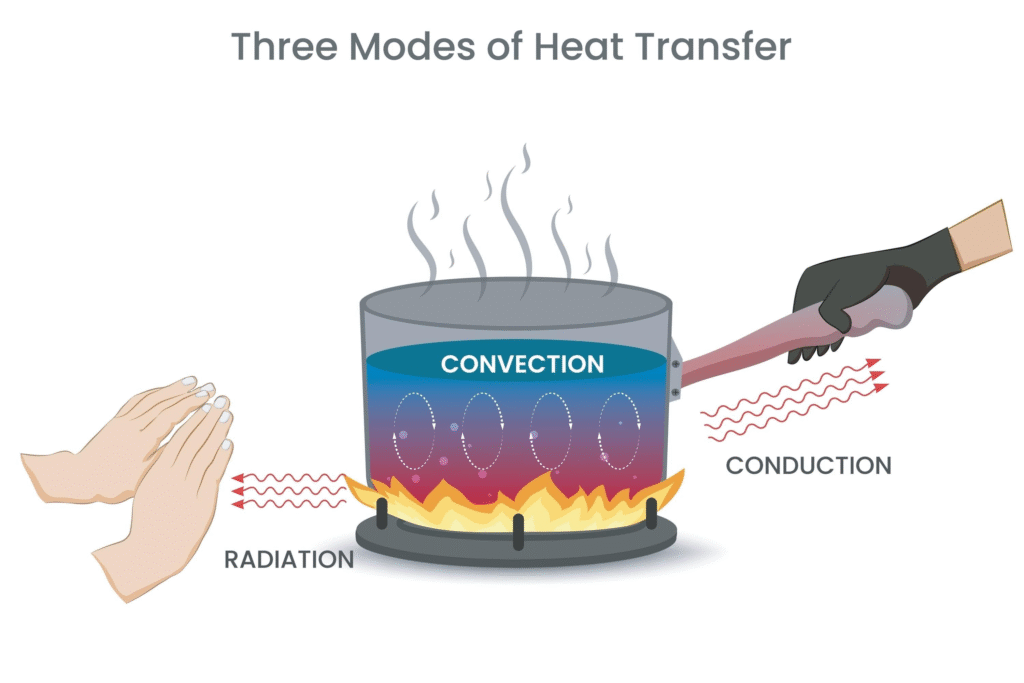
Energy moves through the atmosphere in four distinct ways:
| Process | Mechanism | Real-World Example |
| Radiation | Electromagnetic waves; requires no medium. | Feeling the Sun’s warmth on your skin. |
| Conduction | Direct physical contact between molecules. | The ground warming the thin layer of air touching it. |
| Convection | Vertical movement of fluids (liquids/gases). | Warm air rising to form a thunderstorm. |
| Advection | Horizontal movement of air (wind). | A warm breeze blowing from the south. |
3. The Powerhouse: The Sun
The Sun provides 99.8% of the mass in our solar system and almost all of its energy. It generates power through nuclear fusion, crushing hydrogen into helium in its core at $15\text{ million °C}$.
The Sun’s Journey to Earth
- The Core to Surface: A photon can take 170,000 years to bounce out of the Sun’s dense interior.
- The Sprint: Once free, it reaches Earth in about 8 minutes and 20 seconds.
- The Fate: About 30% is reflected immediately (Albedo). The rest is either scattered (making the sky blue) or absorbed by the surface.
4. Radiation Laws & The Greenhouse Effect
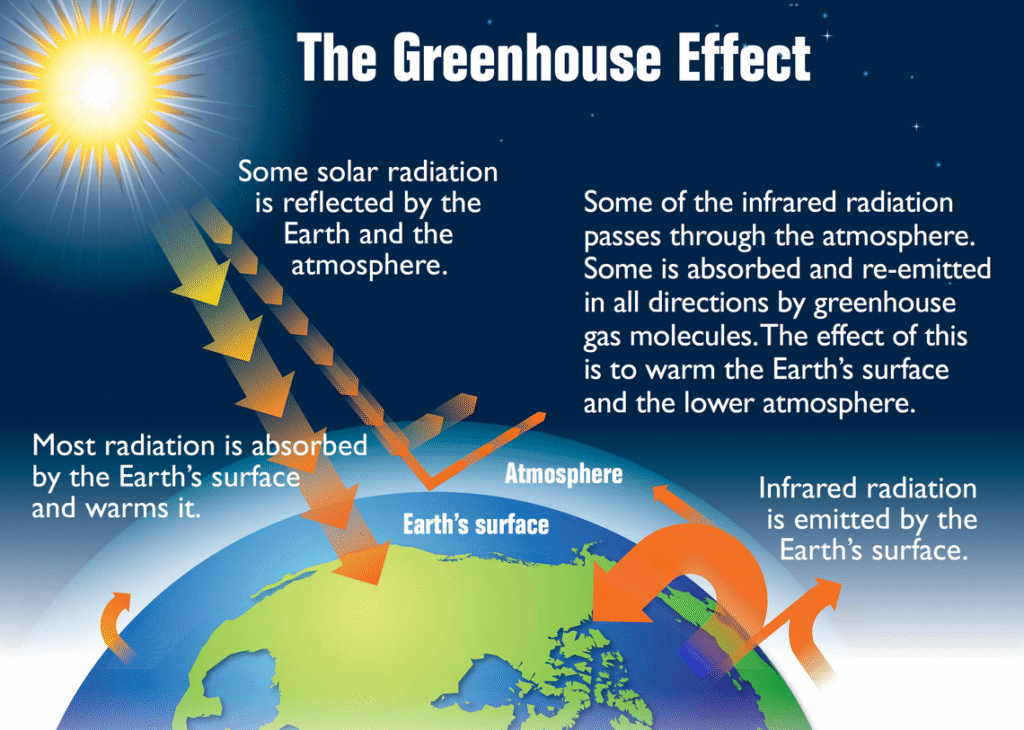
Two physical laws explain the relationship between a body’s temperature and the radiation it emits:
- Stefan-Boltzmann Law: The hotter an object, the much more total energy it emits. Specifically, energy increases to the fourth power of temperature ($E \propto T^4$).
- Wien’s Law: The hotter the object, the shorter the wavelength.
- The Sun (Hot): Emits Shortwave radiation (visible light).
- The Earth (Cool): Emits Longwave radiation (infrared/heat).
The Greenhouse Effect
The atmosphere is like a “selective absorber.” It is transparent to the Sun’s incoming shortwave radiation but traps the Earth’s outgoing longwave radiation. Greenhouse gases (like CO2 and water vapor) absorb this heat and radiate it back down, keeping the planet habitable
5. Summary: The Daily Energy Budget
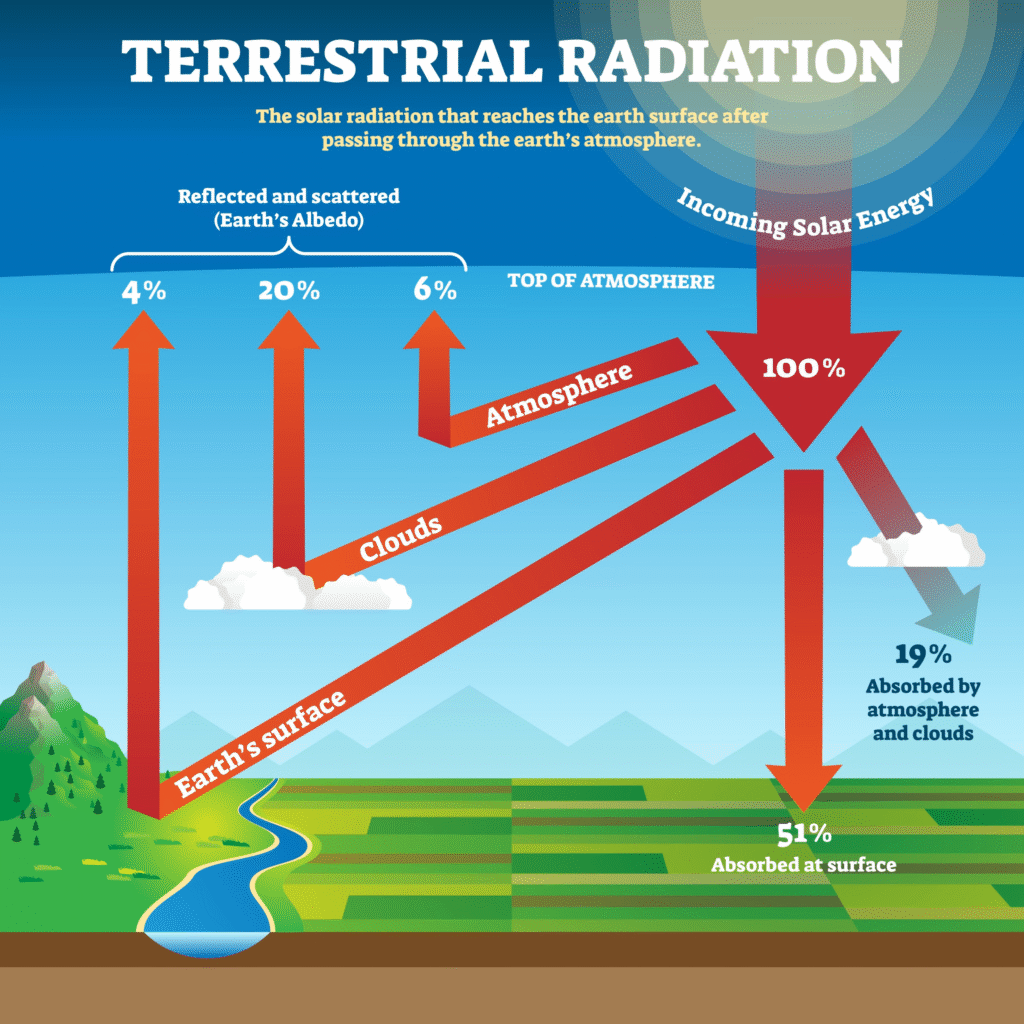
The Earth must maintain an Energy Balance. To stay at a stable temperature, the planet must emit the same amount of energy back into space as it receives from the Sun.
- Surplus: If we trap more energy (via greenhouse gases) than we release, the atmosphere has more “fuel,” leading to more intense storms and rising temperatures.
- Lag: The warmest part of the day is usually mid-afternoon, even though solar radiation peaks at noon, because it takes time for the surface to absorb energy and re-radiate it as sensible heat.