
Mastering calculus starts with understanding how we measure change and accumulation. This guide breaks down the core concepts of integrals, the Fundamental Theorem of Calculus, and the historic rivalry that shaped modern mathematics.
1. What are Integrals?
At its heart, an integral is a mathematical tool used to calculate the “total” of a quantity that is constantly changing.
- Area Under a Curve: Integration allows us to find the exact area of irregular shapes by dividing them into infinite, ultra-thin rectangles.
- Accumulation: If a derivative represents a “rate” (like speed), the integral represents the “accumulation” of that rate (like total distance).
2. The Difference Between Definite and Indefinite Integrals
Understanding the two types of integrals is crucial for solving calculus problems.
The Indefinite Integral (The Antiderivative)
The indefinite integral is the process of reversing a derivative to find the “parent” function.
- Formula:

- The + C: We add a constant (C) because the derivative of any constant is zero, so we must account for any potential lost value.
The Definite Integral (The Numerical Value)
A definite integral calculates the “net” accumulation between two specific points.
- Formula:
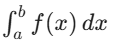
- Key Concept: It results in a single number representing the signed area between the function and the x-axis.
3. The Fundamental Theorem of Calculus (FTC)
The FTC is the bridge connecting derivatives and integrals. It is divided into two essential parts:
Part 1 (The Area Function): Proves that the derivative of an integral is the original function:
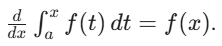
Part 2 (The Evaluation Theorem): Provides the formula used to solve definite integrals:

4. Total Change Theorem and Substitution Rule
To apply calculus to the real world, we use these two advanced tools:
- Total Change Theorem: This states that the integral of a rate of change is the net change in the original quantity (e.g., integrating velocity gives you total displacement).
- The Substitution Rule ($u$-sub): Often called “the Chain Rule in reverse,” this method simplifies complex integrals by substituting a difficult part of the function with a single variable, $u$.
5. The History: Newton vs. Leibniz
The “Calculus Wars” of the 17th century were a bitter dispute between Sir Isaac Newton and Gottfried Wilhelm Leibniz.
- Newton focused on physics and motion (fluxions).
- Leibniz focused on philosophy and notation (sums of areas).
- The Result: While Newton likely discovered it first, we use Leibniz’s notation today because it is more flexible and intuitive.
Key Takeaways for Students
- Integrals = Accumulation and Area.
- Derivatives = Rate of Change.
- FTC = The link that makes calculus solvable.