A chemical reaction is a process where one set of chemical substances is transformed into another. Think of it as a molecular makeover: atoms don’t disappear or appear out of thin air; they just break their old bonds and shake hands with new partners.
How It Works
During a reaction, the chemical bonds between atoms break and reform. This process involves the movement of electrons and results in new substances with entirely different properties than the originals.+1
The Basic Equation
We represent these changes using a chemical equation:
Reactants → Products
Reactants: The starting materials (the “ingredients”).
Products: The new substances formed (the “result”).
4 Signs a Reaction is Happening
Since we can’t see atoms moving, we look for physical “clues” that a chemical change has occurred:
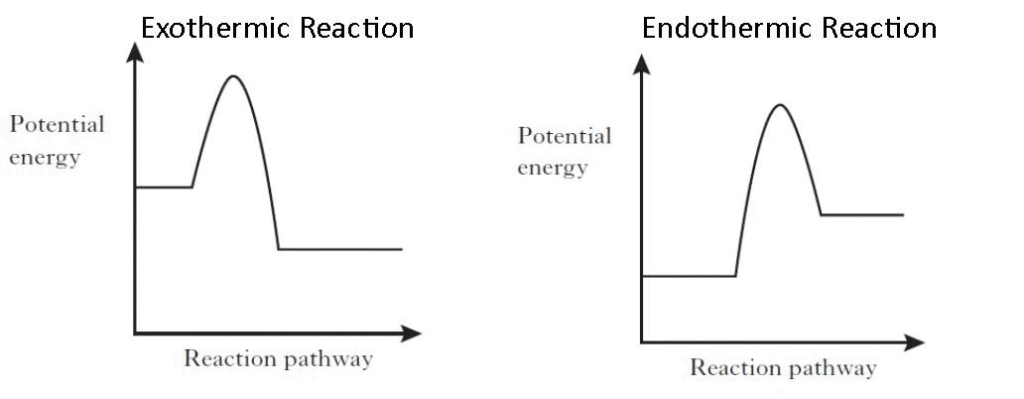
Temperature Change: The mixture gets hot (exothermic) or cold (endothermic).
Color Change: A sudden shift in hue (like iron rusting from silver to orange).
Gas Production: You’ll see bubbles or smell an odor.
Precipitate Formation: A solid suddenly forms inside a liquid solution.
Common Types of Reactions
Chemistry isn’t just one-size-fits-all. Reactions generally fall into a few main “personalities”:
Type
Description
Analogy
Synthesis
Two or more substances combine to form one.
A + B → AB (A couple meeting)
Decomposition
A complex substance breaks down into simpler ones.
AB → A + B (A breakup)
Combustion
A substance reacts with oxygen, releasing energy (fire).
Fuel + O2 (Lighting a match)
Replacement
Atoms “swap” places within compounds.
Dancing partners switching
Why Do They Happen?
It all comes down to energy and stability. Atoms generally want to be in the most stable state possible. If breaking a bond and forming a new one requires less energy than staying as they are, or if it releases a bunch of energy, they’ll make the jump.
The Golden Rule: In any chemical reaction, mass is conserved. This means you must end with the same number of atoms you started with, even if they are rearranged.
What is the chemical equation and how does it describe chemical reactions?
A chemical equation is essentially a chemist’s shorthand. It’s a symbolic representation that shows exactly what happens during a chemical reaction, acting much like a recipe that tells you what you started with, what you made, and how much of each was involved.+1
Anatomy of a Chemical Equation
Every equation is divided into two main sides, separated by a “yields” arrow (→).
1. The Reactants (Left Side)
These are the starting substances. If you’re baking, these are your flour and eggs. In chemistry, we use chemical formulas (like H2O or NaCl) to identify them.
2. The Products (Right Side)
These are the new substances formed by the reaction. Their properties are usually completely different from the reactants.
3. The Symbols
Plus Sign (+): Separates multiple reactants or products.
Yields Arrow (→): Points from the reactants to the products, indicating the direction of the change.
State Symbols: Often written in subscripts to show the physical state: (s) for solid, (l) for liquid, (g) for gas, and (aq) for aqueous (dissolved in water).
How it Describes the Reaction
An equation provides two levels of information: qualitative (what is it?) and quantitative (how much is there?).
The Law of Conservation of Mass
By law, matter cannot be created or destroyed. Therefore, an equation must be balanced. This means you must have the same number of atoms of each element on both sides of the arrow.
To balance an equation, we use coefficients (the large numbers in front of the formulas):
Coefficients: The “2” before H2 tells us we have two molecules of Hydrogen.
Subscripts: The small “2” in H2 tells us there are two atoms in that specific molecule. Never change the subscripts when balancing, or you’ll change the substance itself!
Example: Photosynthesis
Plants take carbon dioxide and water to create glucose and oxygen. The equation describes this complex biological process in one clean line:
From this, a scientist knows exactly how many molecules of CO2 are required to produce a single molecule of sugar.
Key Takeaway
The Formulas tell you who is participating.
The Arrow tells you the direction of the change.
The Coefficients tell you the ratio in which they react.
How does the chemical equation describe stoichiometry?
Think of stoichiometry as the “math of chemistry.” If a chemical equation is a recipe, stoichiometry is the part of the recipe that tells you exactly how many grams of flour you need to make exactly twelve cookies.
The chemical equation describes stoichiometry by providing a fixed ratio between all the substances involved.
1. The Mole Ratio: The Bridge
The most important part of stoichiometry is the coefficients (the large numbers in front of formulas). These numbers represent the number of moles.
A mole is just a specific count of particles (like a “dozen”). In the equation for making ammonia:
The stoichiometry here tells us:
For every 1 mole of N2, you need 3 moles of H2.
Those will always produce exactly 2 moles of NH3.
This 1:3:2 ratio is the heart of stoichiometry. If you have 10 moles of Nitrogen, you know instantly you’ll need 30 moles of Hydrogen.
2. Mass-to-Mass Relationships
While the equation speaks in “moles,” our scales in the lab speak in “grams.” Stoichiometry uses the equation to convert between the two.
To find out how much product you’ll actually get in a lab, you follow a “road map”:
Grams of Reactant → Convert to Moles (using Molar Mass).
Moles of Reactant → Convert to Moles of Product (using the Equation’s Coefficients).
Moles of Product → Convert back to Grams (using Molar Mass).
3. Predicting the “Limit” (Limiting Reactants)
An equation also describes stoichiometry by showing us when we will run out of something.
Imagine you are making grilled cheese:
2 slices of bread + 1 slice of cheese → 1 sandwich
If you have 10 slices of bread but only 2 slices of cheese, the stoichiometry of the “equation” tells you that you can only make 2 sandwiches. The cheese is the limiting reactant. In a chemical equation, the coefficients allow you to calculate which chemical will run out first, stopping the reaction.
4. Theoretical Yield
Stoichiometry allows us to calculate the Theoretical Yield—the maximum amount of product that could be created according to the math of the equation.
By comparing what actually happens in the lab (the Actual Yield) to what the equation predicted, scientists calculate Percent Yield:
Summary
Coefficients provide the recipe’s ratio.
Subscripts ensure the “ingredients” are identified correctly.
The Arrow ensures the “mass in” equals the “mass out.”
When we talk about chemical reactions in solution, we are usually talking about aqueous solutions—where substances are dissolved in water (H2O). Water is often called the “universal solvent” because its polar nature allows it to pull compounds apart, making it the perfect stage for atoms to meet and react.
1. Dissociation: Setting the Stage
Before a reaction can happen in a liquid, the solid reactants usually have to “break apart.” When an ionic compound like salt (NaCl) hits water, the water molecules surround the ions and pull them into the liquid.
Electrolytes: These are substances that dissolve into ions and can conduct electricity.
Molecular Compounds: Some things (like sugar) dissolve but stay as whole molecules. They don’t usually react the same way ions do.
2. Types of Reactions in Solution
There are three heavy hitters when it comes to solution chemistry:
A. Precipitation Reactions
This happens when two clear solutions are mixed, and a solid suddenly crashes out of the liquid. This solid is called a precipitate. It occurs because the new combination of ions is insoluble (it won’t dissolve) in water.+1
Example:
AgNO3(aq) + NaCl(aq) → AgCl(s) + NaNO3(aq)
The AgCl(s) is the solid white powder you’d see at the bottom of the beaker.
B. Acid-Base (Neutralization) Reactions
An acid (which releases H+ ions) reacts with a base (which releases OH– ions). They effectively cancel each other out to form water and a salt.
General Formula:
Acid + Base → Water + Salt
C. Oxidation-Reduction (Redox) Reactions
These involve the transfer of electrons from one substance to another. In solution, this is how batteries work and how metals corrode. One atom “loses” electrons (oxidation) and another “gain” them (reduction).
3. Describing the Solution: Net Ionic Equations
When reactions happen in water, many ions don’t actually do anything—they just float around and watch. These are called spectator ions.
To see what is actually happening, chemists use a Net Ionic Equation.
Molecular Equation: Shows everything as if they were whole molecules.
Complete Ionic Equation: Shows all dissolved ions separated.
Net Ionic Equation: Crosses out the spectators to show only the atoms changing.
Analogy: If you go to a dance, the “Net Ionic” version of the night only lists the people who actually danced; it ignores everyone sitting on the bleachers.
4. Concentration and Molarity
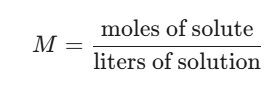
In solution chemistry, stoichiometry depends on Molarity (M), which tells us how “crowded” the solution is with particles.
If a solution is more concentrated, there are more collisions between particles, and the reaction usually happens faster.
What is the limiting reactant and how is it determined?
The limiting reactant (or limiting reagent) is the substance in a chemical reaction that is fully consumed first. Once it runs out, the reaction stops—regardless of how much of the other reactants you still have left over.
Any reactant that remains after the limiting reactant is gone is called the excess reactant.
1. The “Kitchen” Analogy
Think of making a simple ham sandwich:
2 slices of bread + 1 slice of ham → 1 sandwich
If you have 10 slices of bread and 2 slices of ham, how many sandwiches can you make?
The bread says you can make 5 sandwiches.
The ham says you can only make 2 sandwiches.
Since the ham “limits” your production to 2 sandwiches, the ham is the limiting reactant. You will have 6 slices of bread left over (the excess).
2. How to Determine it Mathematically
In a lab, we can’t just count slices; we use stoichiometry to compare the reactants. Here is the foolproof 3-step method:
Step 1: Convert to Moles
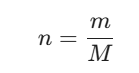
Find the number of moles for each reactant you have. If you were given grams, divide the mass by the molar mass (M).
Step 2: Use the Mole Ratio
Pick one reactant and calculate how much of the other reactant you would need to react with it completely, using the coefficients from the balanced equation.
Step 3: Compare
If you have LESS than you need: That reactant is limiting.
If you have MORE than you need: That reactant is in excess.
3. Example Walkthrough
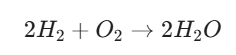
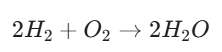
Consider the reaction of Hydrogen and Oxygen to make water:
Suppose you have 5 moles of H2 and 3 moles of O2. Which one is limiting?
Analyze the Ratio: The equation says you need 2 parts H2 for every 1 part O2 (2:1 ratio).
Calculate Requirement: To use all 3 moles of O2, you would need 3 * 2 = 6 moles of H2.
Compare: You only have 5 moles of H2.
Conclusion: Because you have 5 moles but need 6, H2 is the limiting reactant. The reaction will stop as soon as those 5 moles are gone.
4. Why It Matters
Determining the limiting reactant is crucial for:
Cost Efficiency: In industry, companies often use an excess of a cheap reactant to ensure that 100% of an expensive reactant is used up.
Predicting Yield: You can only calculate the theoretical yield (the max product possible) based on the limiting reactant. Using the excess reactant for this calculation would give you a false, inflated number.
What are other practical matters in chemical reactions?
Beyond the math of stoichiometry and the symbols in an equation, several “real-world” factors dictate whether a reaction actually happens in a lab or a factory. These practical matters determine the speed, safety, and success of a chemical process.
1. Reaction Kinetics (The Need for Speed)
Just because a reaction can happen doesn’t mean it will happen quickly. Kinetics is the study of reaction rates.
Concentration: More particles in a space mean more frequent collisions.
Temperature: Heating molecules makes them move faster and collide with more energy.
Surface Area: Grinding a solid into a powder exposes more atoms to the other reactant, speeding things up.
Catalysts: These are the “matchmakers” of chemistry. They speed up a reaction without being consumed by it, often by lowering the Activation Energy (Ea).
2. Chemical Equilibrium (The Two-Way Street)
In textbooks, arrows usually point one way (→). In reality, many reactions are reversible (⇌).
When a reaction reaches equilibrium, the forward and backward reactions happen at the same rate. The “practical” challenge here is that the reaction never truly finishes; you’re left with a mixture of reactants and products. Chemists use Le Chatelier’s Principle to “trick” the reaction into making more product by changing the pressure or temperature.
3. Thermodynamics (Energy and Spontaneity)
This tells us if a reaction will occur “spontaneously” (on its own).
Enthalpy (ΔH): Does the reaction release heat (Exothermic) or absorb it (Endothermic)?
Entropy (ΔS): Does the reaction create more disorder? Nature generally prefers “messiness.”
Gibbs Free Energy (ΔG): The ultimate decider. If ΔG is negative, the reaction is thermodynamically “allowed” to happen.
4. Percent Yield and Purity
In a perfect world, stoichiometry tells you exactly how much product you’ll get. In a practical world, things go wrong:
Side Reactions: The reactants might make something you didn’t intend.
Recovery Loss: Some product gets stuck to the filter paper or evaporates.
Impurities: If your starting materials aren’t 100% pure, your math will be off from the start.
Term
Meaning
Theoretical Yield
The maximum amount calculated on paper.
Actual Yield
The amount you actually weigh on the scale.
Percent Yield
(Actual / Theoretical) * 100.
5. Safety and Scale-up
When reactions move from a tiny test tube to a massive industrial vat, practical safety becomes the priority.
Exothermic Runaway: If a reaction releases heat faster than the container can cool down, it can lead to an explosion.
By-product Management: Deciding what to do with toxic gases or waste liquids produced alongside the desired product.
Putting it Together: The Haber Process
The best example of these practical matters is the Haber Process (making fertilizer). It uses a catalyst to speed things up, high pressure to shift the equilibrium toward the product, and constant cooling to manage the enthalpy. Without balancing these practicalities, we couldn’t feed half the world’s population.