
What is differentiation in a single variable?
Earth and Atmospheric Sciences
If the area problem is about “accumulation,” the tangent problem is about direction. It is the second foundational challenge that led to the invention of calculus.
The problem asks: How can we find the slope of a line that touches a curve at exactly one point?
The Geometric Conflict
To find the slope of a straight line, you usually need two points (x1, y1) and (x2, y2) to use the rise-over-run formula:
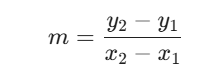
However, a tangent line by definition only touches the curve at one specific point. If you only have one point, the formula becomes $0/0$, which is undefined. This is the “problem”—you lack the data required by traditional algebra to determine the steepness of the curve at that exact moment.
The Solution: Secants and Limits
Calculus solves this by using a “nearby” point to create a secant line (a line that intersects the curve at two points).
- The Approximation: Pick a point P on the curve where you want the slope. Then, pick a second point Q nearby.
- The Movement: Calculate the slope between P and Q.
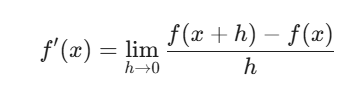
- The Limit: Slide point $Q$ along the curve closer and closer to point P. As the distance between the points (often called h or Δx) approaches zero, the secant line “morphs” into the tangent line.
The formal definition of this slope is the derivative:
Why It Matters
The tangent problem isn’t just about drawing lines on graphs; it’s the mathematics of instantaneous change.
- In Physics: The slope of a position-time graph at a single point gives you the instantaneous velocity (how fast you are going at that exact split-second).
- In Economics: It represents marginal change, such as the cost of producing exactly one more unit.
- In Optimization: At the highest or lowest point of a curve (like the peak of a mountain), the tangent line is perfectly flat (slope = 0). Finding these points allows us to maximize profits or minimize waste.
The Connection
While the Area Problem (Integration) and the Tangent Problem (Differentiation) seem like opposites—one adding things up and the other breaking things down into points—they are actually two sides of the same coin. This “miracle” of math is the Fundamental Theorem of Calculus.